
Materials testing in Guyana.
Concrete, soil, and aggregate testing for contractors, developers, and engineers across Guyana. Every sample and reading is logged against where it came from, so a result traces back to the pour or the layer it belongs to.
What's included
Every cylinder, core, and soil sample is logged against its source, its test date, and the technician who ran it, so a result on your desk traces cleanly back to the pour or the borehole it came from.
- Ultrasonic pulse velocity (UPV) concrete testing
- Concrete cube & cylinder strength testing
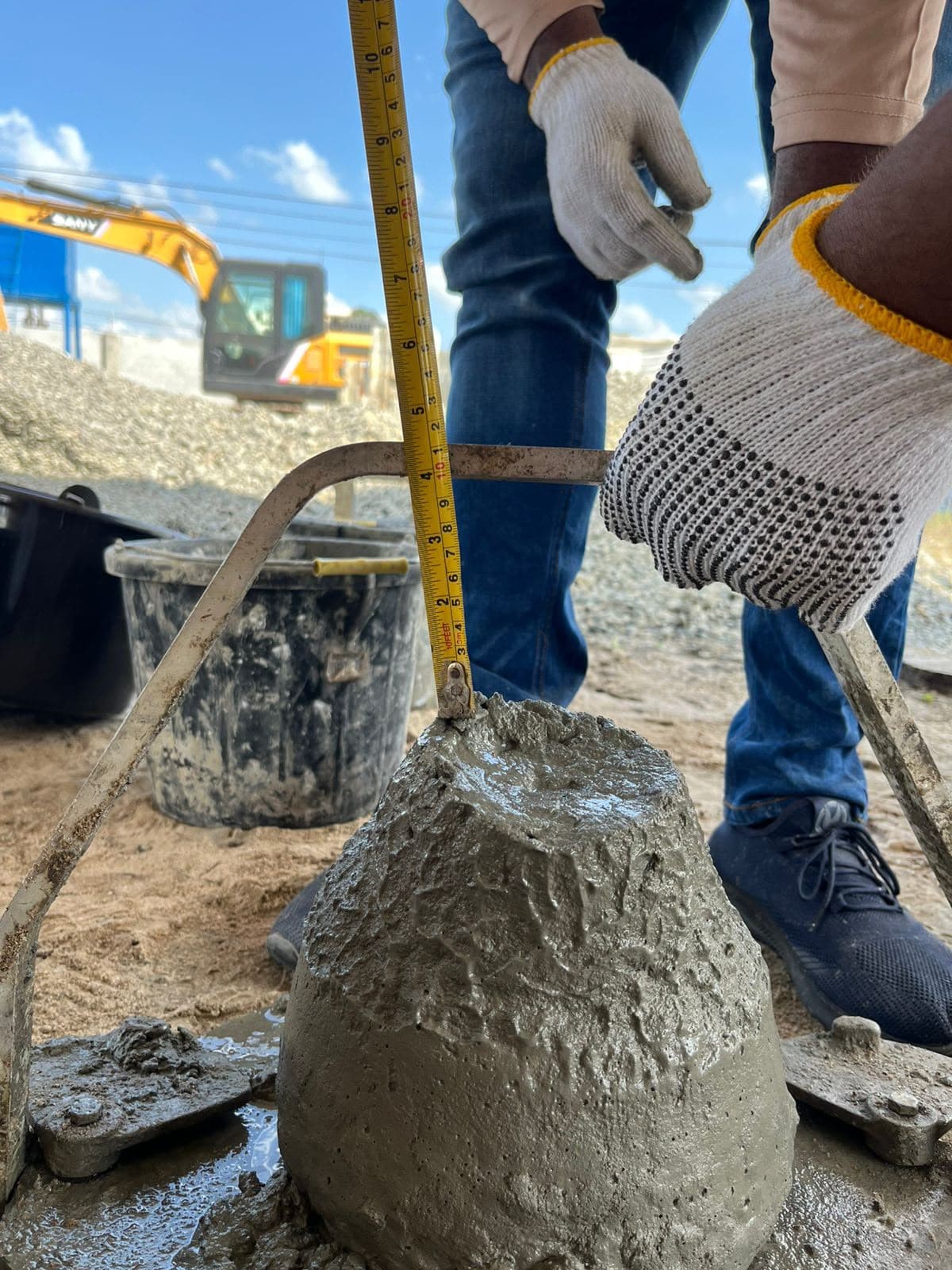
- Slump and workability testing
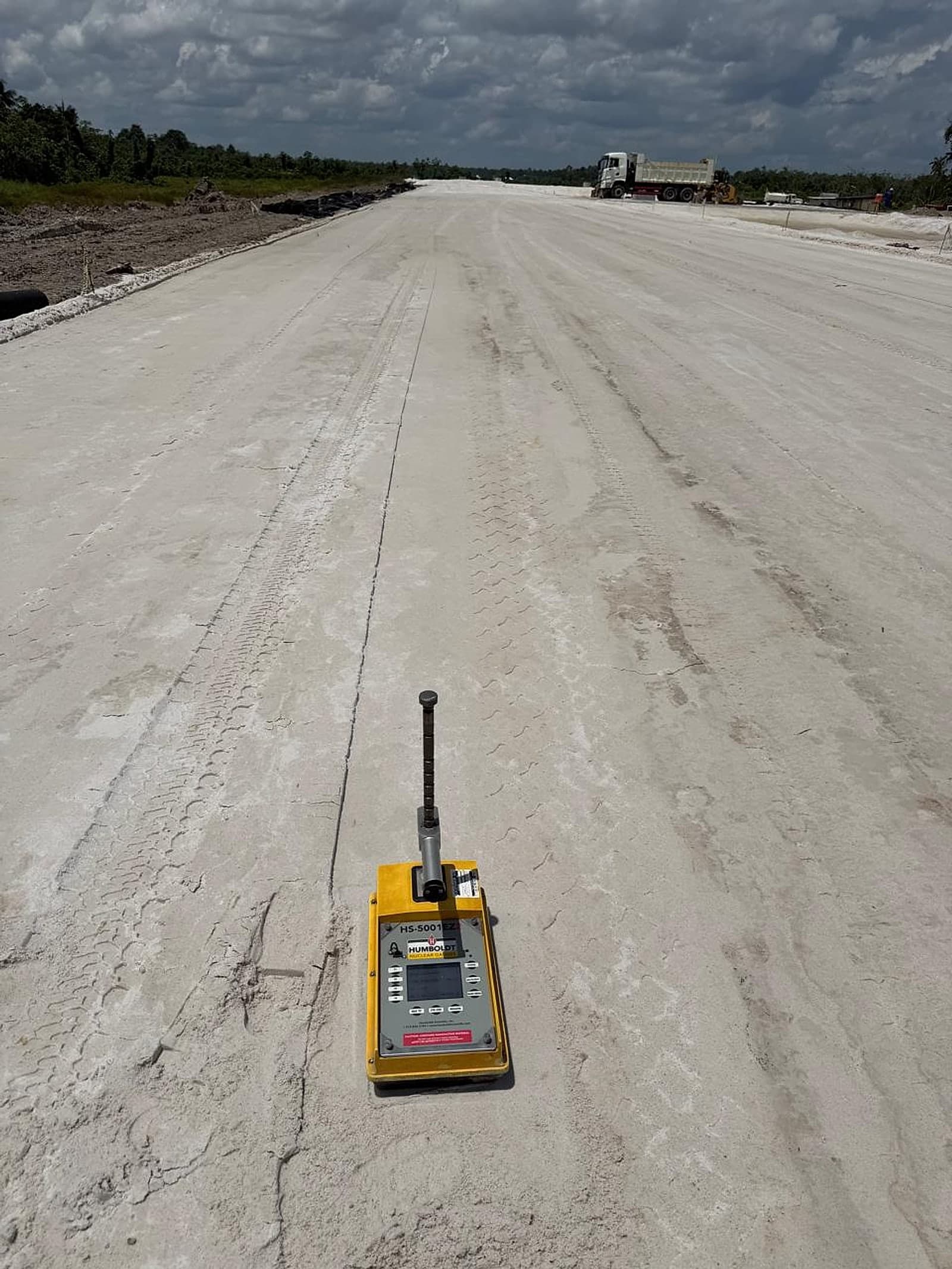
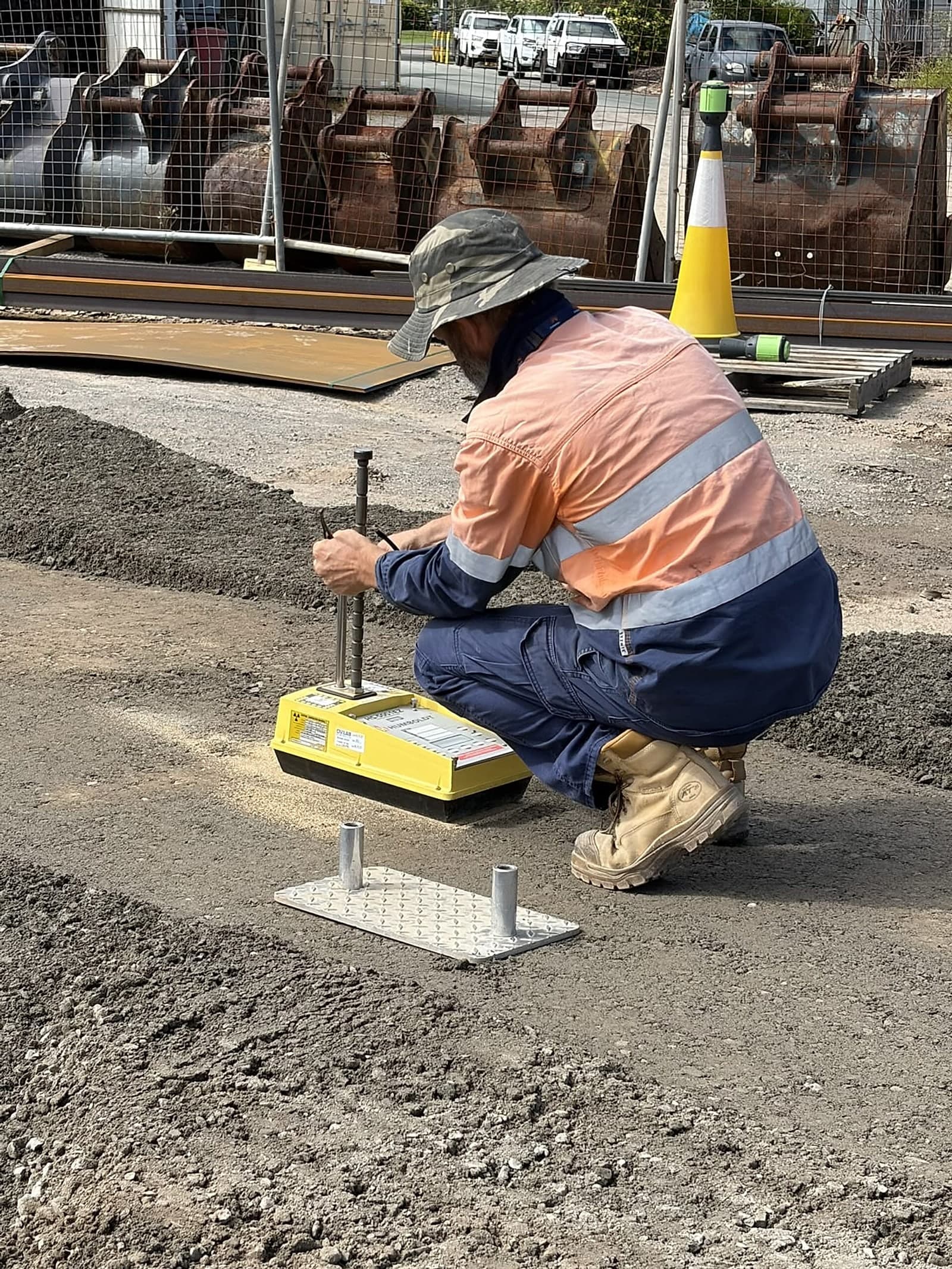
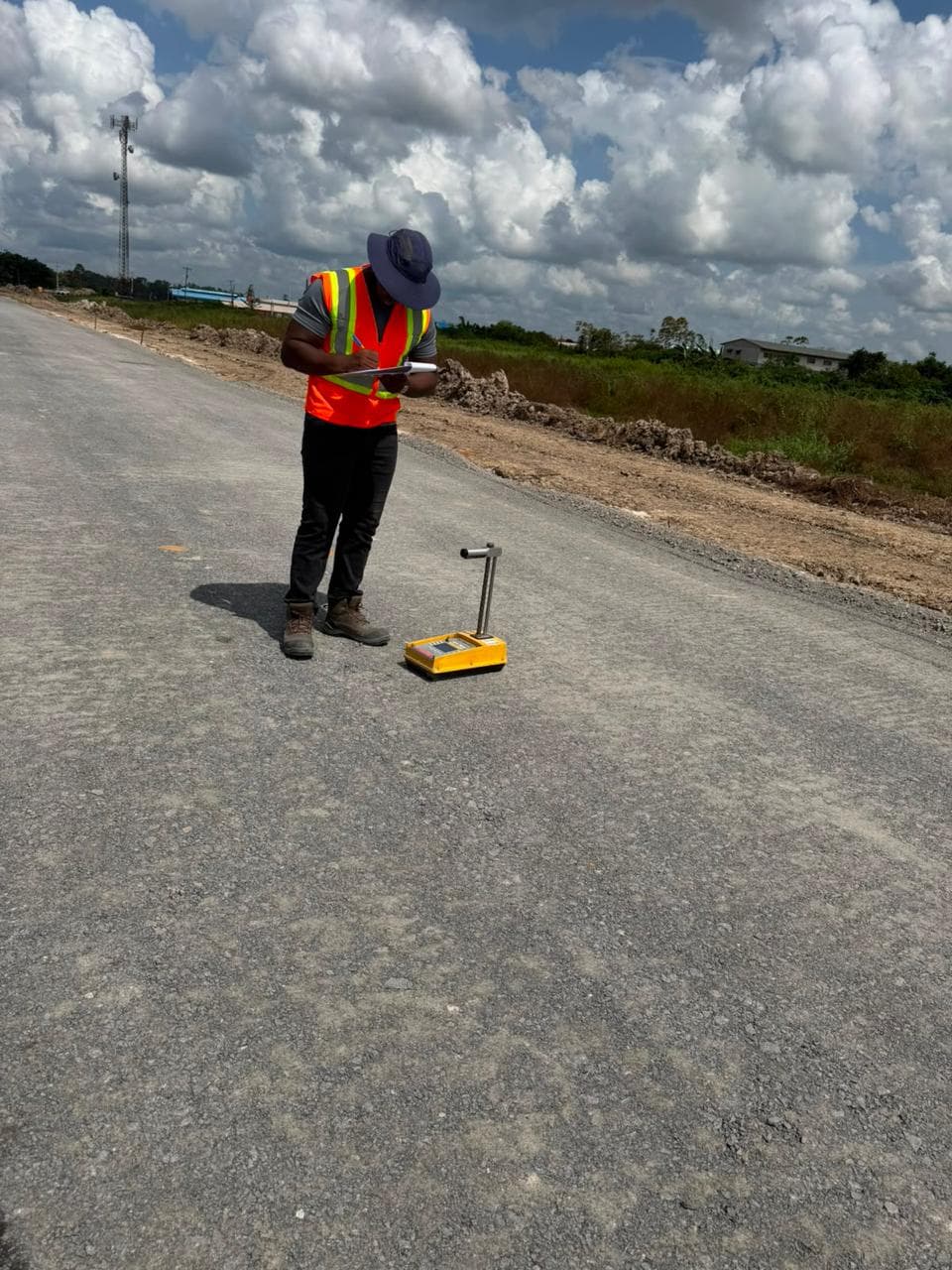
- Soil compaction (Proctor) & nuclear field density
- Aggregate grading and sieve analysis
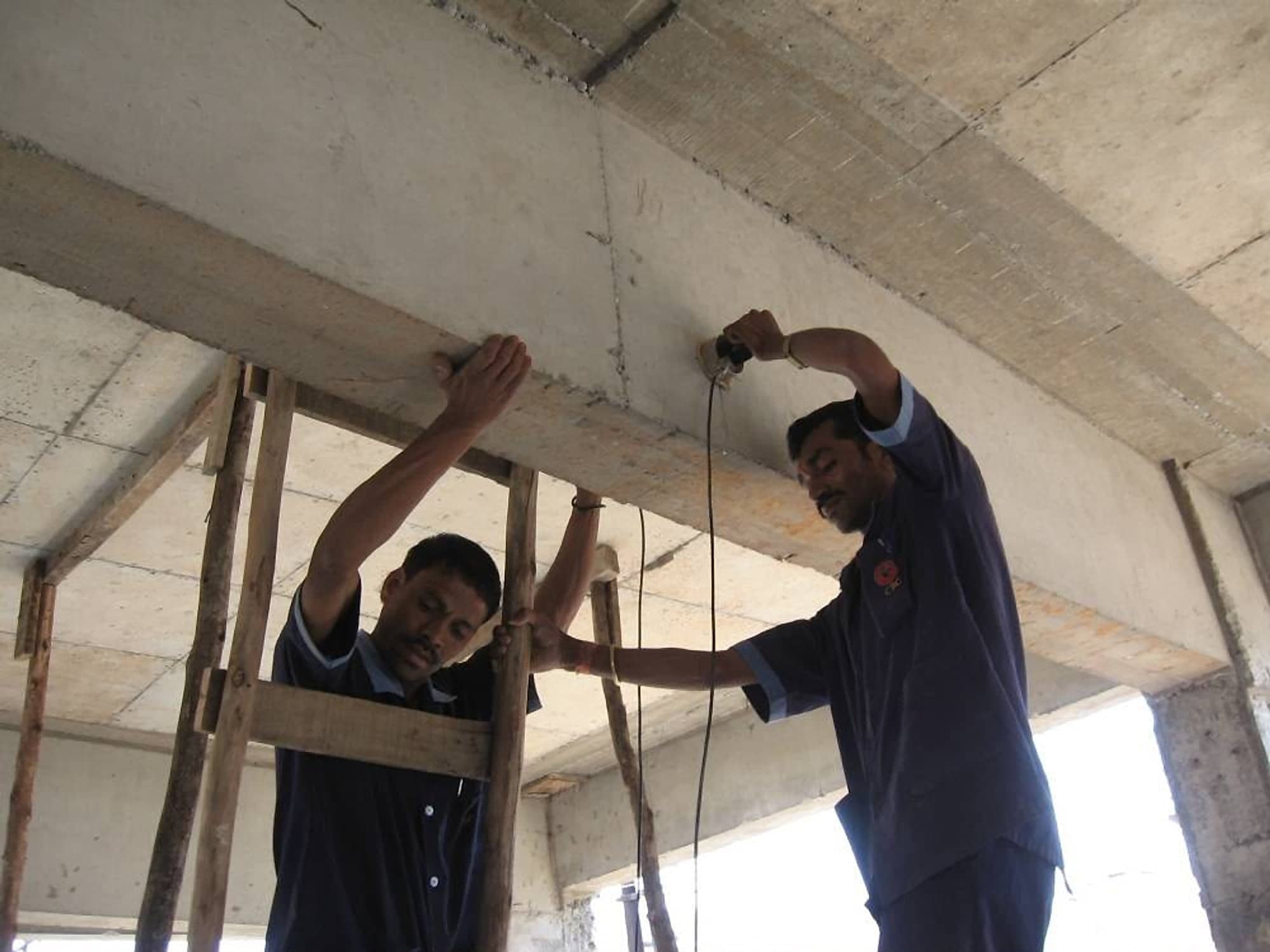
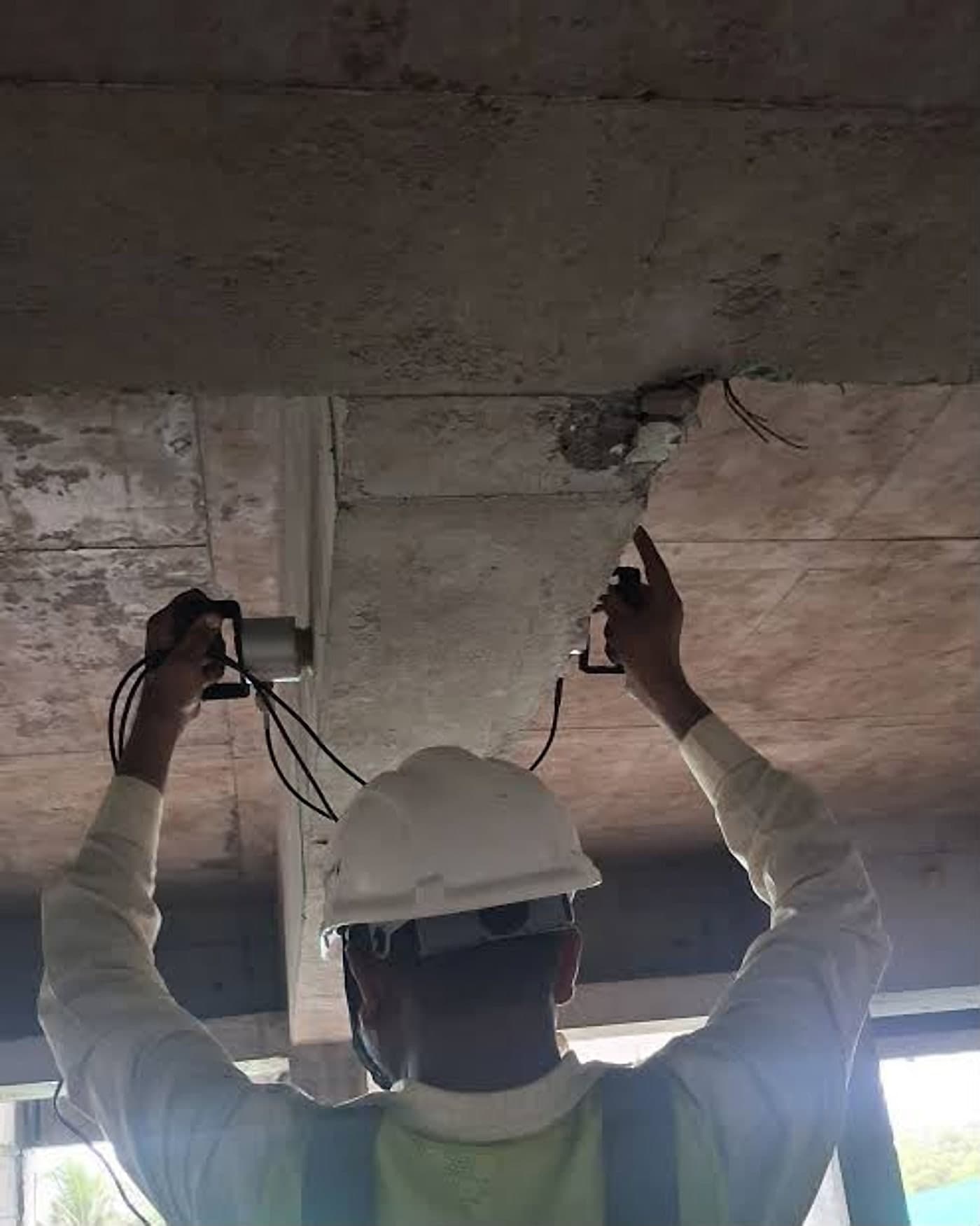
Ultrasonic pulse velocity testing.
A pulse is sent through the concrete from one face to the other. The faster it arrives, the denser and more uniform the concrete. Voids, honeycombing, and cracks show up without cutting into the member.
Pulse velocity, km/s
- DoubtfulBelow 3.0
- Medium3.0 to 3.5
- Good3.5 to 4.5
- ExcellentAbove 4.5
Typical interpretation bands. Acceptance limits come from your project specification.
- New pours
- Compare slabs, beams, and columns across a pour to find the weak batch or the poorly compacted corner.
- Existing structures
- Check the condition of concrete before refurbishment, change of use, or added load.
- Questioned results
- Locate voids, honeycombing, and cracks first, so coring goes where it's needed.
When to call us
- Before and during a pour
- Slump checks and cube or cylinder sampling at the truck, with 7- and 28-day strength tests scheduled for you.
- During earthworks
- Proctor compaction and nuclear field density to confirm each layer meets specification before the next goes on.
- On concrete already in place
- Ultrasonic pulse velocity to check quality and uniformity without coring or demolition.
Based in Nandy Park, East Bank Demerara, and working across Guyana. Call +592 630 3372 or send a request and we'll scope it.